Quick Answer
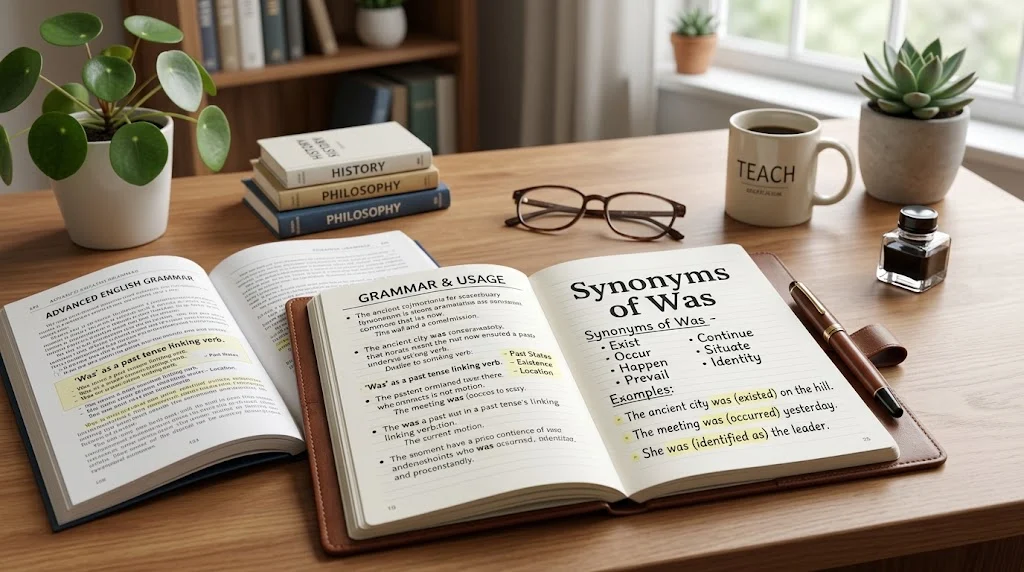
“Was” expresses a past state, identity, condition, or location. Alternatives include existed, remained, seemed, occurred, happened, and stayed.
When revising a sentence, you may notice that “was” appears several times in a short paragraph. Although it is grammatically correct, repeating the same verb can make writing feel flat or less precise.
The phrase synonyms of was can refer to alternatives that express a particular past state, condition, location, identity, or event. The right choice depends on what the original sentence actually means.
Choosing a more specific verb can make a sentence clearer and more vivid. For example, “she remained calm” gives a slightly different meaning from “she was calm.”
Below, you will find 50 useful alternatives and closely related expressions, each with a simple meaning and two examples. They cover everyday writing, education, business, storytelling, technology, science, and other common contexts.
1. Existed
Short Meaning: Continued to have reality or presence at a particular time in the past.
Example 1: Ancient civilizations existed long before modern cities developed.
Example 2: A small village existed near the river for centuries.
2. Remained
Short Meaning: Continued in the same state, place, or condition during a past period.
Example 1: She remained quiet throughout the difficult meeting.
Example 2: The old building remained standing after the storm.
3. Stayed
Short Meaning: Continued being somewhere or in a particular condition.
Example 1: Daniel stayed at home because the weather was unpleasant.
Example 2: The machine stayed operational throughout the overnight test.
4. Seemed
Short Meaning: Appeared to have a particular quality or condition based on observation.
Example 1: The explanation seemed reasonable to the students.
Example 2: Her decision seemed unusual at first.
5. Appeared
Short Meaning: Gave an impression of having a particular quality or identity.
Example 1: The painting appeared brighter under natural light.
Example 2: He appeared confident during the interview.
6. Became
Short Meaning: Changed into a particular state, condition, role, or identity.
Example 1: The quiet student became an excellent public speaker.
Example 2: The simple sketch became a detailed architectural plan.
7. Happened
Short Meaning: Took place at a particular time in the past.
Example 1: The accident happened shortly after midnight.
Example 2: Something unexpected happened during the experiment.
8. Occurred
Short Meaning: Took place, especially when discussing events in formal writing.
Example 1: The error occurred during the final stage of testing.
Example 2: Several changes occurred after the company expanded.
9. Took Place
Short Meaning: Happened or occurred during a particular period or at a specific location.
Example 1: The ceremony took place inside the historic library.
Example 2: The scientific conference took place in June.
10. Lived
Short Meaning: Had a home or continued life in a particular place or period.
Example 1: My grandparents lived in a small coastal town.
Example 2: The famous poet lived during a period of major social change.
11. Resided
Short Meaning: Had a permanent or established home in a particular location.
Example 1: The artist resided in Paris for several years.
Example 2: Several wealthy families resided near the historic district.
12. Dwelt
Short Meaning: Lived in a particular place, usually in literary or formal language.
Example 1: The novelist dwelt in a quiet cottage near the forest.
Example 2: According to the story, a mysterious family dwelt beyond the hills.
13. Lay
Short Meaning: Rested or extended in a particular position or location in the past.
Example 1: The old book lay beneath a pile of papers.
Example 2: A narrow road lay between the fields.
14. Sat
Short Meaning: Occupied a seated position or was positioned somewhere in the past.
Example 1: The teacher sat beside the window during the discussion.
Example 2: A silver vase sat on the wooden table.
15. Stood
Short Meaning: Was positioned upright or located in a particular place.
Example 1: A tall statue stood outside the museum entrance.
Example 2: She stood beside her friend during the ceremony.
16. Rested
Short Meaning: Remained in a particular position or place without movement.
Example 1: The keys rested on the kitchen counter.
Example 2: His hand rested gently on the table.
17. Remained Located
Short Meaning: Continued to be situated in a particular place over time.
Example 1: The laboratory remained located near the university campus.
Example 2: The office remained located in the city center for years.
18. Occupied
Short Meaning: Took up a particular space, position, or physical location.
Example 1: A large wooden desk occupied most of the room.
Example 2: The ancient temple occupied the highest part of the hill.
19. Contained
Short Meaning: Had something inside a particular space, object, or structure.
Example 1: The box contained several letters from her childhood.
Example 2: The report contained useful information about the project.
20. Held
Short Meaning: Had something within a space or provided a particular condition.
Example 1: The conference hall held hundreds of visitors.
Example 2: Her speech held the audience’s attention.
21. Represented
Short Meaning: Stood for or symbolized a particular idea, person, group, or identity.
Example 1: The blue symbol represented peace in the artwork.
Example 2: The building represented a major change in local architecture.
22. Signified
Short Meaning: Indicated or expressed a particular meaning, idea, or condition.
Example 1: The broken chain signified freedom in the sculpture.
Example 2: His silence signified disagreement with the proposal.
23. Indicated
Short Meaning: Showed that a particular condition or fact existed.
Example 1: The results indicated a clear improvement in performance.
Example 2: Her expression indicated that something was wrong.
24. Reflected
Short Meaning: Showed or revealed a particular quality, condition, or situation.
Example 1: His careful writing reflected years of academic experience.
Example 2: The architecture reflected the region’s cultural history.
25. Expressed
Short Meaning: Communicated a feeling, thought, quality, or idea through words or actions.
Example 1: Her letter expressed deep appreciation for the teacher.
Example 2: The painting expressed a strong sense of loneliness.
26. Demonstrated
Short Meaning: Clearly showed a quality, ability, result, or condition.
Example 1: The experiment demonstrated how heat affected the material.
Example 2: His performance demonstrated excellent communication skills.
27. Showed
Short Meaning: Made a fact, quality, condition, or result clear to others.
Example 1: The chart showed steady growth throughout the year.
Example 2: Her response showed considerable patience.
28. Indicated a State
Short Meaning: Communicated that a particular condition existed at an earlier time.
Example 1: The report indicated a state of uncertainty within the organization.
Example 2: His expression indicated a state of complete surprise.
29. Proved
Short Meaning: Established something as true through evidence or successful demonstration.
Example 1: The experiment proved the original theory was incomplete.
Example 2: Her results proved valuable during the research project.
30. Constituted
Short Meaning: Formed or made up a particular whole, condition, or organization.
Example 1: These departments constituted the company’s main administrative structure.
Example 2: Several small units constituted the larger research team.
31. Comprised
Short Meaning: Consisted of several parts that formed a complete group or whole.
Example 1: The committee comprised teachers, researchers, and local officials.
Example 2: The collection comprised paintings from several different periods.
32. Consisted Of
Short Meaning: Was formed from several people, objects, elements, or parts.
Example 1: The course consisted of six practical learning modules.
Example 2: The necklace consisted of silver beads and small gemstones.
33. Included
Short Meaning: Had something as one part of a larger group or collection.
Example 1: The package included a charger, manual, and protective case.
Example 2: Her presentation included several useful examples.
34. Featured
Short Meaning: Presented or displayed a particular person, object, style, or quality.
Example 1: The exhibition featured paintings from emerging local artists.
Example 2: The magazine featured an interview with a successful designer.
35. Presented
Short Meaning: Showed, offered, or displayed something for people to examine.
Example 1: The museum presented an impressive collection of ancient jewellery.
Example 2: The manager presented the new business plan to investors.
36. Displayed
Short Meaning: Put something where it could be clearly seen or examined.
Example 1: The gallery displayed several carefully restored paintings.
Example 2: A glass cabinet displayed the designer’s latest jewellery collection.
37. Located
Short Meaning: Situated in a particular place or position.
Example 1: The research center was located near the university.
Example 2: The hotel was located beside a quiet mountain road.
38. Situated
Short Meaning: Positioned in a particular place, especially in formal descriptions.
Example 1: The castle was situated above a narrow valley.
Example 2: Their office was situated close to the main station.
39. Present
Short Meaning: Existing or being in a particular place at a past moment.
Example 1: Several experienced teachers were present at the meeting.
Example 2: Only a few guests were present during the early session.
40. Available
Short Meaning: Ready for use, access, or purchase during a particular past period.
Example 1: Several study rooms were available after the examination.
Example 2: The software was available to customers before the official launch.
41. Possible
Short Meaning: Able to happen, exist, or be achieved under particular conditions.
Example 1: Several solutions were possible under the original budget.
Example 2: A faster result was possible with better equipment.
42. Necessary
Short Meaning: Required for a particular purpose, result, or situation.
Example 1: Additional training was necessary before employees used the equipment.
Example 2: A detailed inspection was necessary after the accident.
43. Appropriate
Short Meaning: Suitable for a particular situation, purpose, audience, or setting.
Example 1: Formal language was appropriate for the academic report.
Example 2: Casual clothing was appropriate for the weekend gathering.
44. Responsible
Short Meaning: Having a duty, role, or cause connected with a past situation.
Example 1: Maria was responsible for organizing the annual event.
Example 2: Poor maintenance was responsible for the machine’s failure.
45. Successful
Short Meaning: Achieved the intended result or produced a favorable outcome.
Example 1: The campaign was successful because customers responded positively.
Example 2: Their first experiment was successful after several careful adjustments.
46. Available for
Short Meaning: Ready or accessible for a particular person, purpose, or activity.
Example 1: The conference room was available for private meetings.
Example 2: Extra support was available for new employees.
47. Underway
Short Meaning: Already happening or progressing at a particular time in the past.
Example 1: Construction was underway when the inspection team arrived.
Example 2: A major investigation was underway by early morning.
48. In Progress
Short Meaning: Happening or developing during a particular period.
Example 1: The renovation was in progress when visitors entered the building.
Example 2: Several important negotiations were in progress that afternoon.
49. Ongoing
Short Meaning: Continuing over a period without having finished at that time.
Example 1: The company faced an ongoing shortage of skilled workers.
Example 2: An ongoing study examined changes in ocean temperatures.
50. Current Then
Short Meaning: Existing or applicable at a particular point in the past.
Example 1: The regulations current then were different from today’s rules.
Example 2: Her responsibilities current then included training new staff.
Short Quiz
1: Which word most directly expresses continued existence in the past?
A. Existed
B. Happened
C. Displayed
D. Presented
2: Which alternative is most suitable for a formal sentence about an event taking place?
A. Stayed
B. Occurred
C. Sat
D. Lived
3: Which word best describes a person changing into a new condition or role?
A. Remained
B. Became
C. Resided
D. Contained
4: Which expression is most suitable for describing construction that had already started?
A. Underway
B. Possible
C. Available
D. Appropriate
5: In the sentence “The necklace consisted of silver beads,” what does the phrase express?
A. Location
B. Composition
C. Movement
D. Emotion
Quiz Answers
- A. Existed directly expresses having reality or presence during a past period.
- B. Occurred is a formal choice for saying that an event took place.
- B. Became describes a change from one condition, role, or identity into another.
- A. Underway shows that an activity had already begun and was continuing.
- B. Consisted of explains the parts or materials forming the necklace.
Frequently Asked Questions
1: What is the best synonym for was?
For general past existence or presence, “existed” can be a useful alternative, depending on the sentence.
2: What does was mean in simple English?
It is the past tense form of “be” used with singular subjects and the pronoun “I.”
3: What is a formal alternative to was?
“Occurred” is a formal alternative when the intended meaning is that an event happened.
4: Can was describe objects and situations?
Yes, it can describe an object’s identity, condition, location, existence, or a situation in the past.
5: What is the opposite of was?
There is no single direct opposite, because the appropriate contrast depends on the sentence and its intended meaning.
Conclusion
Finding suitable alternatives can make writing more precise, especially when the same verb appears repeatedly. However, replacing a simple grammatical verb should never change the original meaning of a sentence.
The most useful choice depends on context, tone, grammar, and the exact relationship being described. A word that works well for location may sound incorrect when discussing identity, while an event related expression may not suit a description of a person.











5 thoughts on “Synonyms of Was: Formal and Creative Alternatives for 2026”